Breast milk is the finest resource a newborn can receive, and the length of time a
mother breastfeeds plays a great role in the health of her child.
Unlike other foods, breast milk is perfectly balanced for the baby’s needs,
and it changes naturally as the child grows.
This makes it far more than just a meal—it is a living protection and
a strong foundation for life.
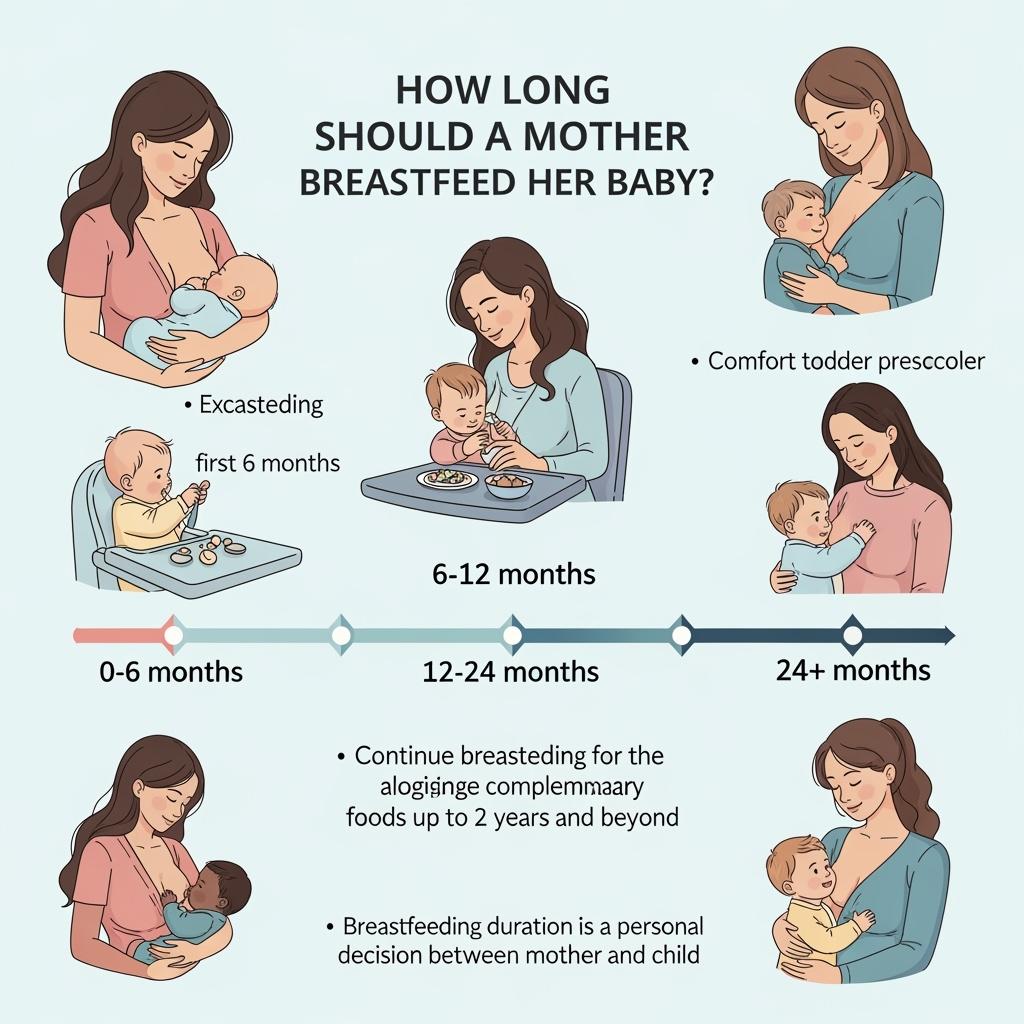
Health experts around the world recommend that a baby should be exclusively
breastfed for the first six months of life.
This means that no other food or drink, not even water, is needed during this time.
Breast milk alone is enough to keep the child nourished, hydrated, and safe.
After six months, other foods can be introduced,
but breastfeeding should continue alongside these new foods.
Ideally, mothers are encouraged to keep breastfeeding until the child
is at least two years old or longer if possible.
Why is this important?
Because the longer a mother breastfeeds, the greater the protection against
illnesses such as diarrhea, pneumonia, and malnutrition.
Every drop of breast milk strengthens the baby’s body and helps prevent
diseases that often affect children who are not breastfed.
Breastfeeding also helps children grow with fewer risks of being underweight,
which is a common sign of poor nutrition in many communities.
For the mother, continuing to breastfeed brings benefits too.
It helps her recover more quickly after childbirth, lowers the chance of
certain illnesses, and strengthens the bond between her and her baby.
Breastfeeding is also free, always available, and does not require
outside resources, making it the best and most sustainable choice
for families and communities.
So, how long should a mother breastfeed her baby?
As long as she can, and at least up to two years.
Each extra month of breastfeeding builds a healthier child,
a stronger mother, and a more self-reliant community.
It is truly the most valuable resource—a resource that no money can buy.